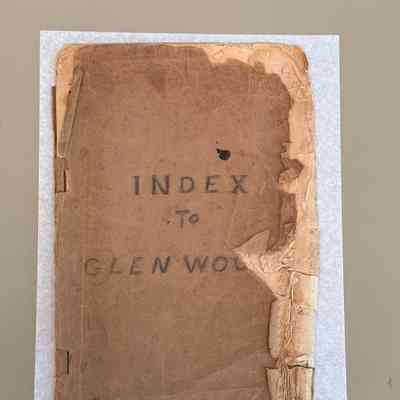
Original Index of Glenwood Cemetery
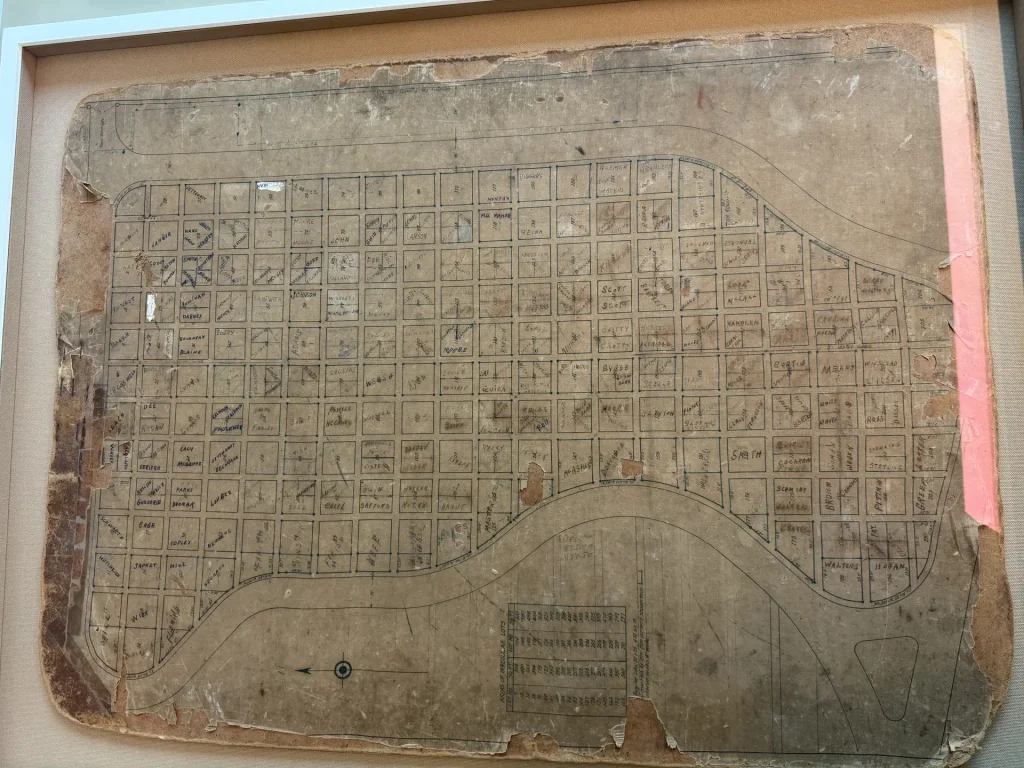
This handwritten index serves as a reference for administrative purposes at Glenwood Cemetery. Compiled in the late 19th century, the document organizes the names of lot owners and interments in both alphabetical and numerical order. Each entry includes details such as section and lot numbers, names of the owners, and notes regarding transfers or family plots. The ledger illustrates the record-keeping practices within Glenwood's administrative framework, featuring handwritten columns and annotations that suggest frequent use by staff or superintendents to locate gravesites before the establishment of formal ledgers and plat maps. The Index to Glenwood reflects the operational needs of a cemetery in post-Reconstruction Houston. By the 1880s, Glenwood experienced significant growth, making it necessary to maintain accurate burial records for managing lot ownership and family interments. This volume likely originated around the same time as the Board of Directors Minutes Book (1886–1976) and the Bylaws established in 1888, both pivotal components of the foundational documents produced by the Houston Cemetery Company.
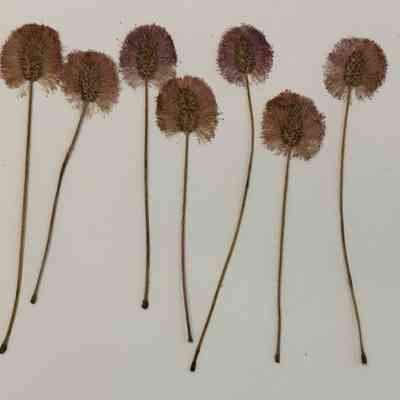
Powderpuff
This pressed Powderpuff Mimosa plant shows unique leaves that have flattened out along the main stem during the preservation process. Its distinctive pink, round flower keeps its shape thanks to careful pressing. The plant is securely attached to special paper with safe glue and kept in a sealed holder for protection.
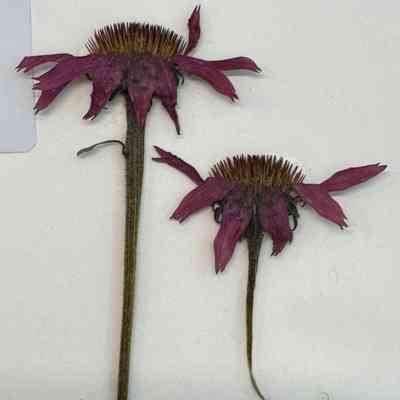
Purple Coneflower
These pressed Purple Coneflower shows a flattened center surrounded by drooping pink-purple petals. The way it has been preserved highlights the spiky center and the rough leaves on the stem. The flower has been carefully attached to special paper and is safely stored in a sealed holder to keep it protected.
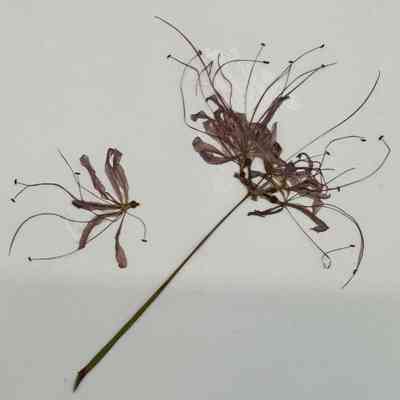
Red Spider Lily
This pressed Red Spider Lily is a striking display of bright red flowers that have a unique shape, with petals that curl and long stamens that reach outwards. The flower is mounted on a special piece of paper, without any leaves, showing how it typically grows, blooming on a bare stem before the leaves come in. The flower has been carefully attached with safe glue and stored in a protective case to keep it safe.
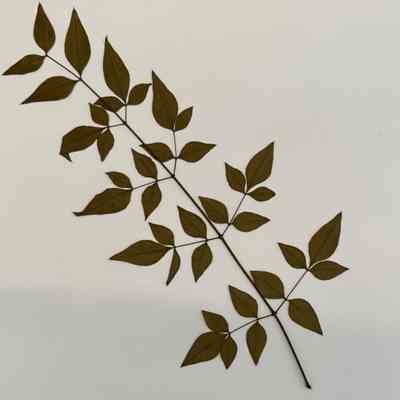
Sacred Bamboo Leaf
This pressed leaf from the Sacred Bamboo plant features beautiful, lacy patterns with smooth, pointed leaf shapes. When pressed, the leaf flattened and took on a rich bronze-brown color. The branch has been carefully attached to special paper with safe glue and kept protected in a sealed holder.
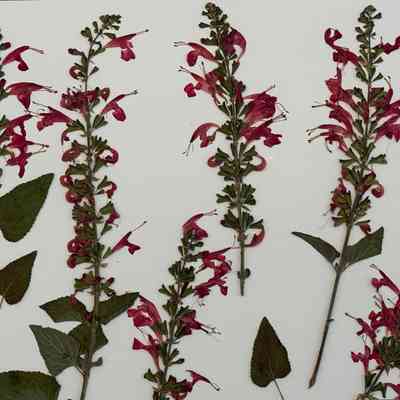
Scarlet Sage
This pressed Scarlet Sage plant features bright red flowers shaped like little tubes, arranged in neat circles along a square stem. The heart-shaped leaves have been flattened for easy viewing. The plant has been carefully placed on special paper with safe glue and kept in a protective holder to ensure it stays preserved.
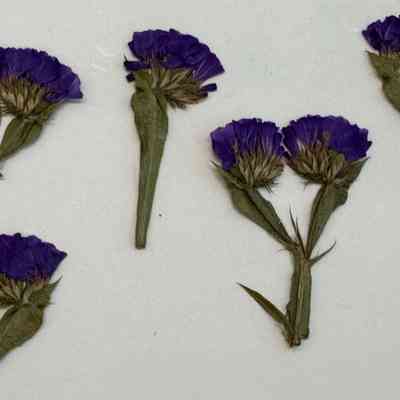
Sea Lavender
This dried Sea Lavender plant is beautifully displayed, showcasing its delicate purple-blue outer structures and small white flowers, which keep their vibrant colors even after drying. The pressing process flattens the stems above the leaves. The plant has been carefully secured to special paper with safe glue and is kept safe in a sealed holder.
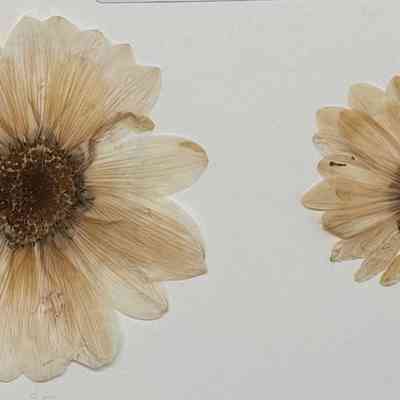
Shasta Daisy
These pressed Shasta Daisies specimen showcases a big flower with white petals that lie flat around a bright yellow center. The way it's pressed keeps the difference between the wide flower and its rough, jagged leaves intact. The plant has been carefully mounted on special paper for display and kept safe in a sealed holder.
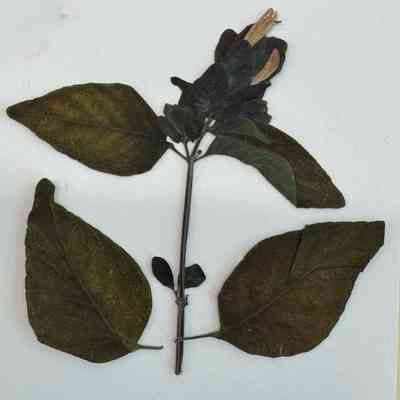
Shrimp Plant
This pressed Shrimp Plant specimen showcases its unique layers of colorful leaves that look like scales, with small white flowers hidden inside. The way it has been pressed allows you to see its arching spike shape clearly. The stem has been carefully secured to special paper with a safe glue and is protected in a sealed holder to keep it safe.
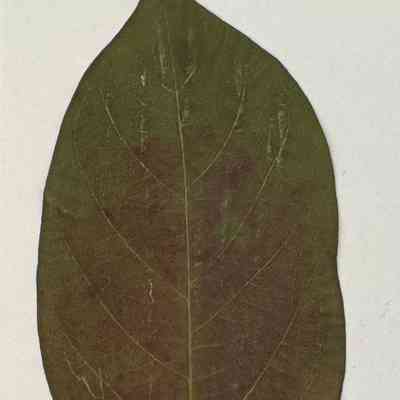
Southern Magnolia Leaf
This Southern Magnolia leaf has been preserved to show off its beautiful features. The top side is shiny and dark, while the underside is thick and soft with a rusty-brown color. When the leaf was pressed, its sturdy texture was carefully flattened while remaining well preserved. It is attached to a special sheet of paper with safe glue and kept in a protective holder to ensure it stays in great condition.
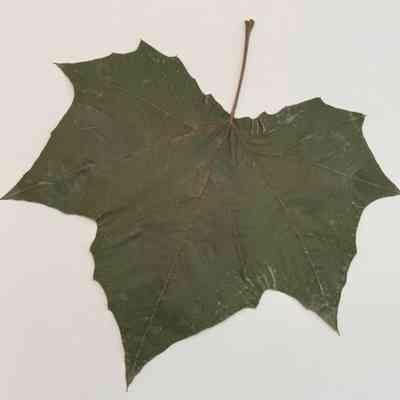
Sycamore Leaf
This pressed Sycamore leaf specimen measures 4 to 8 inches wide and has a distinctive shape with several lobes (3 to 5) and jagged edges. During pressing, the bottom part of the leaf stem is flattened, showing the fine hairs along the main veins. The leaf is carefully attached to a special type of paper with a glue that won't damage it and is protected in a sealed holder.
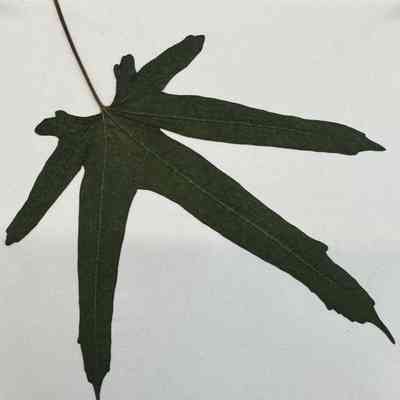
White Mulberry Leaf
This pressed specimen of a White Mulberry leaf shows the different shapes the leaves can take. Some leaves are smooth while others have two to seven lobes or notches. The pressing process brings attention to the rounded sides of the leaves and the pointed tip in the middle. The leaf has been carefully attached to special herbarium paper using a safe adhesive and sealed with a protective L-seal to preserve it.
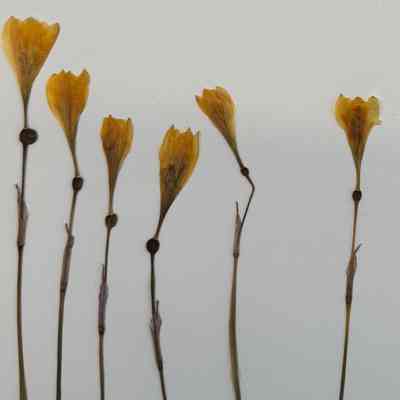
Yellow Rain Lily
This pressed Yellow Rain Lily specimen showcases a bright yellow flower with six petals, resting on a stem without leaves. The pressing method keeps the beautiful flower intact along with its slender, grass-like leaves. The specimen has been carefully mounted on special paper with safe glue and kept in a sealed holder to protect it.